

Track corporate supply chain emissions
Carbon accounting for corporations with large supply chains.
TEAMMATES
1 Product Manager
6 Developers
Impact
1st
Market-ready
product
Reduced setup time from
weeks to hours
2X
Increase in
supply chain clients
The problem
With successful sales and positive customer feedback, Optera needed to transform its proof-of-concept supply chain carbon accounting tool into its first core product offering.
The initial tool enabled clients to view their supply chain emissions, but internally, consultants supporting the product lacked clarity and confidence in how the system worked, they often struggled to explain results to clients. Most consultants reverted to manual spreadsheets.
“We’re selling a product that we don’t fully understand… the product itself is not delivering what we need.”
“It’s just easier to know what’s going on and feel good about the calculations if you’re doing it in Excel.”
“[The supply chain product] is a bit of a black box for the entire team... Is what is being reported accurate? How do I know how to check the accuracy of that?”
To move forward, the team recognized the critical need for a platform rooted in trust and transparency. One that empowers users to confidently manage emissions data, understand how the system works, and communicate insights clearly to their clients.
Design kickoff
When I joined Optera, I joined a team new to working with a designer. After interviewing the services team (our primary users), I led a design kickoff workshop to create a good foundation and momentum from the start.

Determining project scope
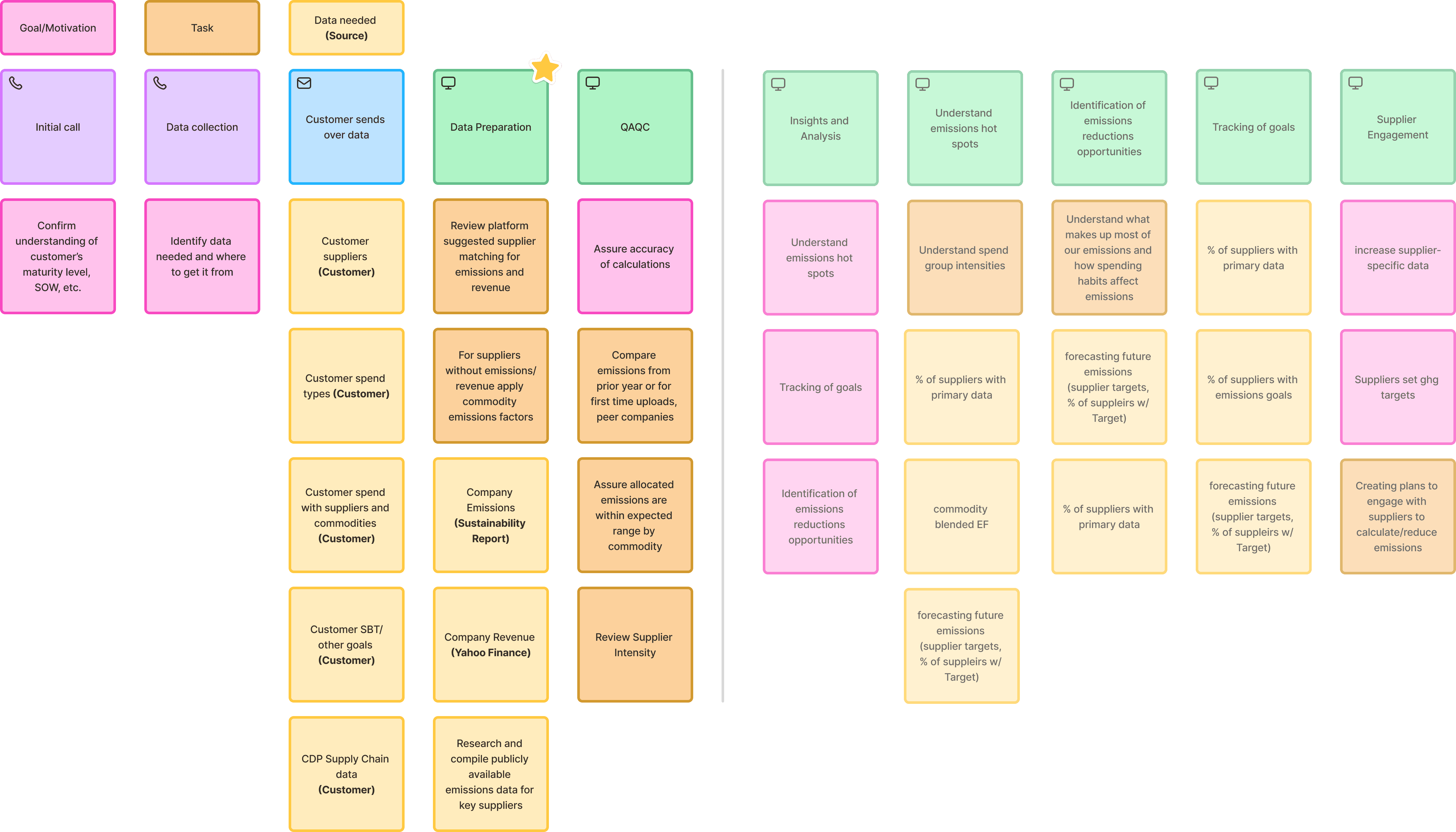
The initial challenge was gaining clarity on what we actually needed to build. I partnered with the product manager and the services team to map both the current and ideal customer experiences.
Key insight
Our research revealed that users didn’t trust the data in the platform and spent excessive time manually reviewing uploads. We discovered the root issue wasn’t the data itself, but a lack of confidence in the upload process. This led us to design a more intuitive, guided experience that helped users upload and enrich their data by matching it with Optera’s database. By improving this critical step, we could significantly reduce the burden of reviewing the data.
We then defined a roadmap that aligned with our timeline, outlining three key stages: uploading and improving data, exploring and editing data, and generating reports.
The solution
Under a tight timeline, our team launched Optera’s first supply chain carbon accounting product, driving immediate sales, strong customer enthusiasm, and decreasing onboarding from 4–6 weeks to just hours, allowing all clients to transition to the new product within the first month.

Supply chain overview
Get a comprehensive, high-level view of your supply chain emissions, helping you monitor progress and manage data at scale.
Emission calculations
View exactly how emissions are calculated, assess data quality, and document specific use cases with calculation notes for full traceability.
Supplier page
View key metrics to uncover areas of high emissions impact. Access supplier records, edit emissions data, and manage contact information—all in one place.
Match supplier emissions data
Seamlessly match suppliers to emissions and revenue data from Optera’s database for more accurate, specific emissions calculations.
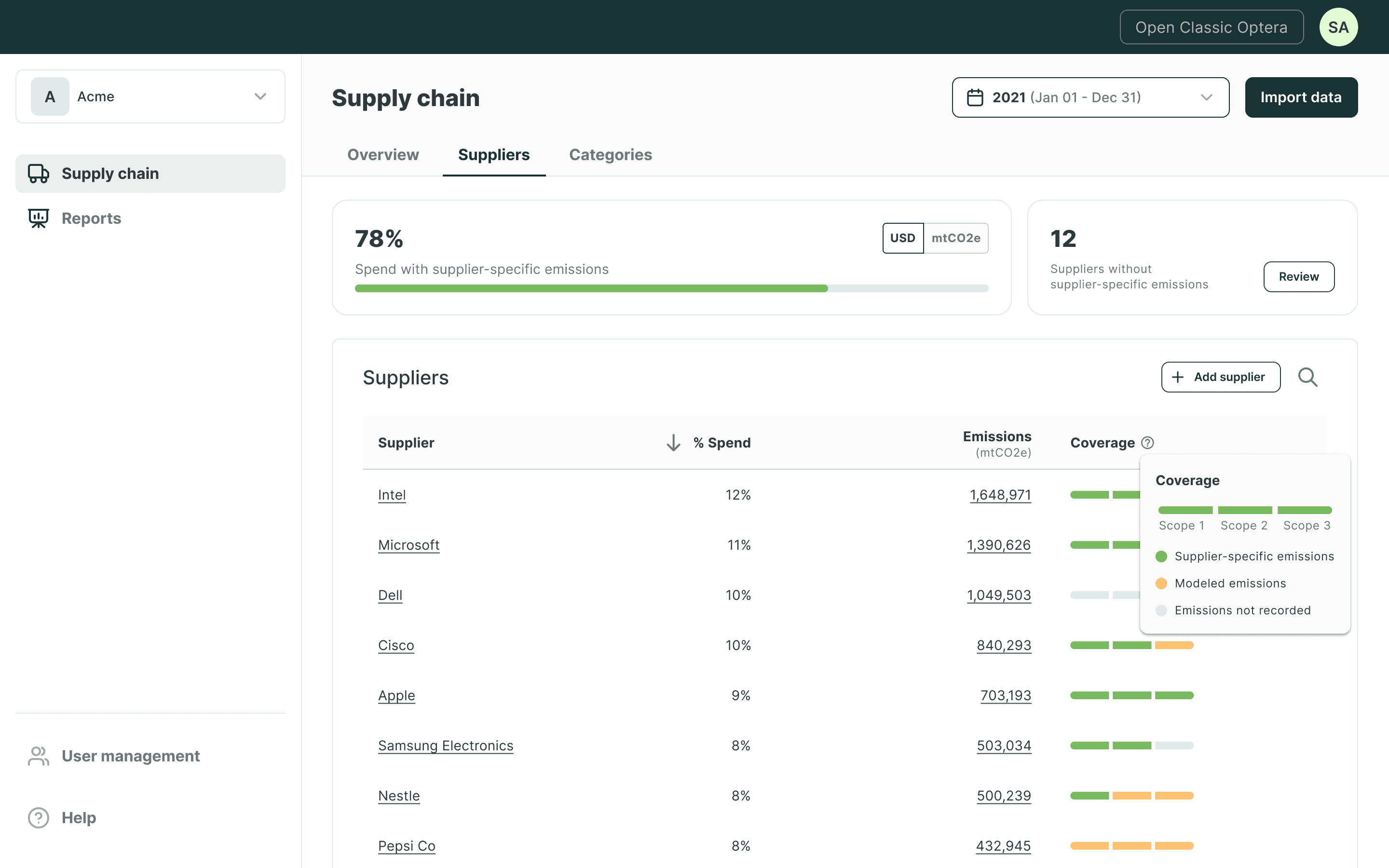
Manage suppliers
Manage your supplier list, quickly identify suppliers with low-quality data, and add more specific supplier data.
Manage categories
Manage emissions categories and assign emissions factors for more accurate emissions calculations.

Reports
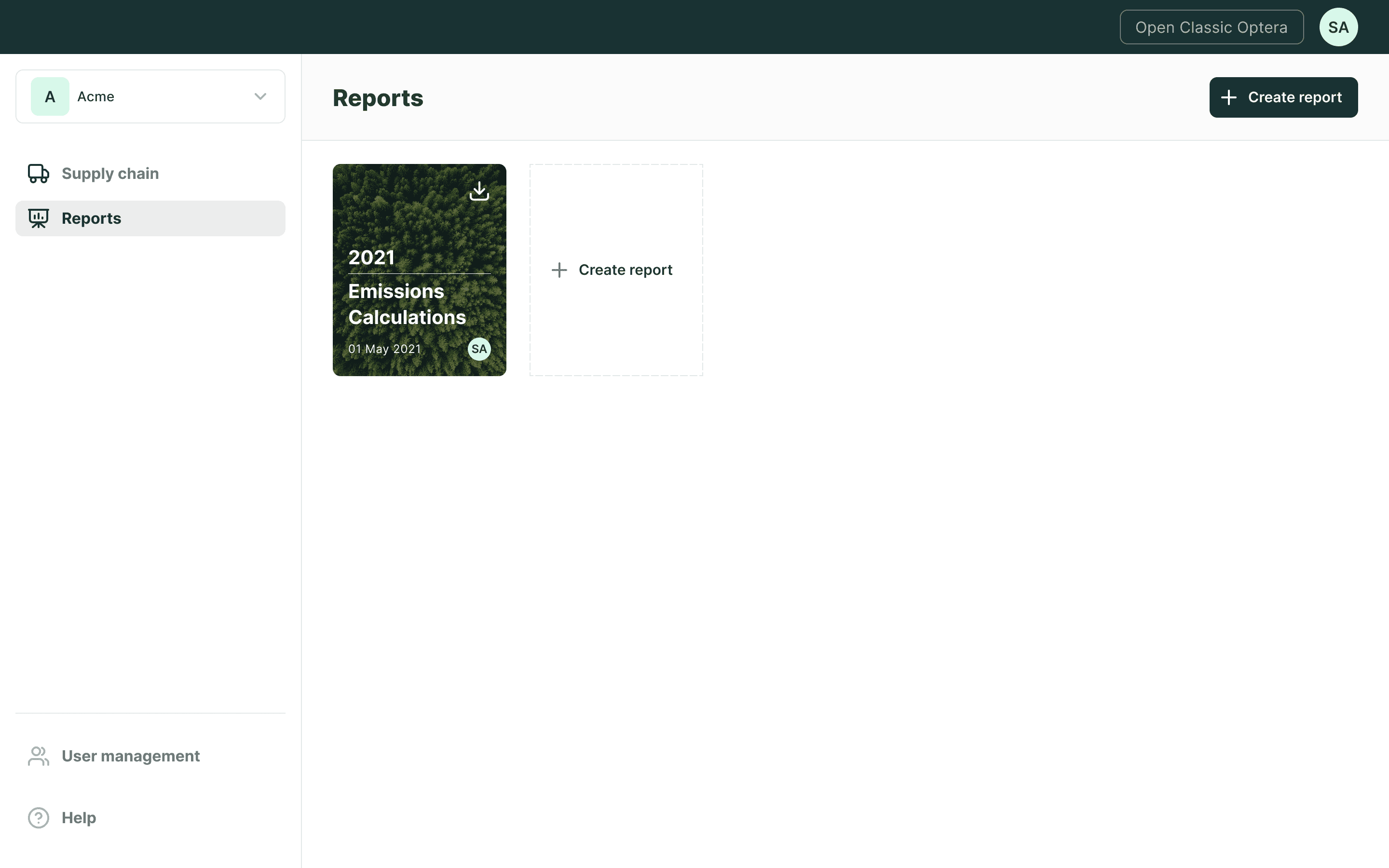
Generate emissions calculation reports for record-keeping and audit purposes.